01 · Species
We confirm the scientific name
We start with the actual product and check the species against official sources.
The commercial name may hide the species that CITES regulates.
Part of the case file
We validate species and annex, review the operation documents and handle the permit when required.
CITES looks at the species, not the commercial name of the product.
The correct documentation depends on the scientific name, the annex and the exact type of movement.
The commercial name is not enough: the scientific name must be confirmed.
The species listing determines the obligations that apply.
Import, export and re-export do not necessarily require the same document.
Species, quantity, invoice and permit must describe the same operation.
Four moments, in the order that determines the document.
We start with the actual product and check the species against official sources.
The commercial name may hide the species that CITES regulates.
We establish which annex it is listed in and what that means for the operation type.
The obligation changes with the species and the movement.
We check validity, scope and quantity; if a new document is needed, we handle the permit.
An import permit does not on its own cover a re-export.
Invoice, quantity, species and permit stay connected in the case file.
The operation reaches the border with the right document.
The system connects species, annex, permit and operation; a person decides how CITES applies.
Keeps every piece of data and every document tied to the operation.
Confirms the species and the applicable obligation.

The species identified, the right document and the permit reviewed or filed.
The deliverable is adapted to the species, annex and specific movement.
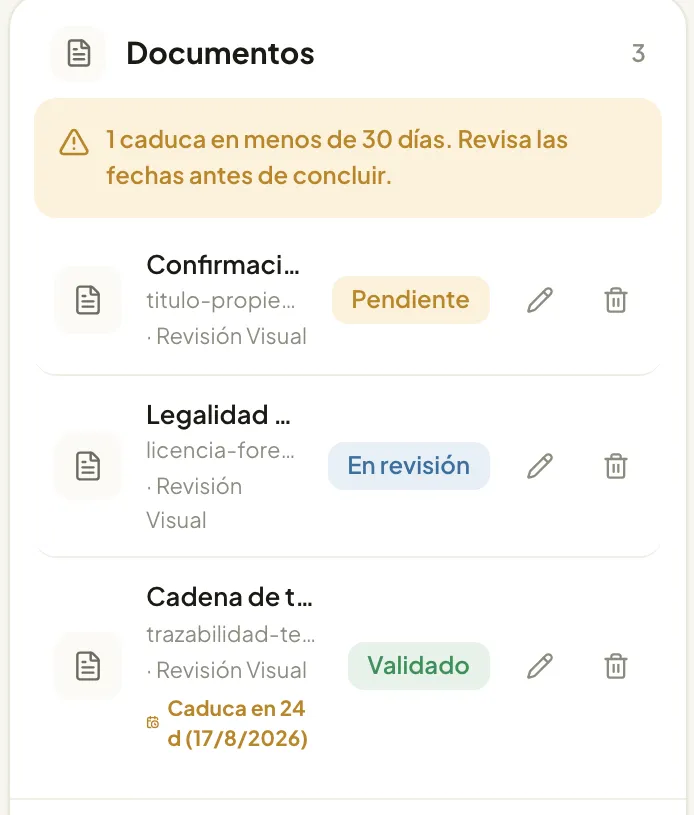
Product, known species, origin, destination and operation type allow us to define the work.
Product, species, origin, destination and the documents that already exist.
Annex, obligation and the document required by the operation.
Permit review or filing and the case file for the movement.
We work on the specific case. The platform and portal are part of the contracted case file.
Ask about my CITES caseIt depends on the species, not the commercial product. The first step is to identify the scientific name and check the annex.
It depends on the operation type, validity, scope and quantity. We review it before the goods move.
Yes. When required, we handle the filing before the competent authority and follow it up.
Yes. They require checking whether the entry document is enough or whether a different one is needed.
The obligation may change. That is why we confirm the scientific name against official sources at the start.
Tell us which product you are moving, where from and where to.
Ask about my CITES casedeslioo
Private access · preview
If you have the password, enter to see the progress.
Incorrect password.